Showing posts with label future. Show all posts

Friday, 25 May 2012

Capturing the Dragon

"Houston, it looks like we got us a Dragon by the tail"


Well that was amazing: I just watched the live video feed from NASA of the SpaceX Dragon capsule docking (well, being grabbed by a robot arm) with the International Space Station. This is a pretty important moment: it's the first time a privately funded mission has made it to space and linked up with NASA.


It was pretty impressive, to watch the robot arm being carefully guided to link up with the capture mechanism on the Dragon: that's a lot of complicated equipment being wielded in a place with very little margin for error, and watching the tense faces at Houston goes to show how hard it all is. But of course, that sort of thing has happened loads of times now, with the ISS having been in orbit for years, and numerous other complicated things (such as Hubble) being delicately positioned in orbit.

That isn't the point though: so far, every space mission has had the backing of very big, well funded (in comparison)  government agencies. The achievements of NASA et al. over the past decades have obviously been immense - humans on the moon, probes to the edge of the solar system, robots on other planets. These are right and proper things for publicly funded science to be doing - but if it takes a massive government-funded organisation to get anything into space, that's going to be a problem. It's not the kind of setup that will let humans really do space, or allow the kind of unlimited exploration and adventure that we'd all love to see.

NASA's budget, as we recently became only too aware, can only stretch so far, and making the hard choices between different missions is no fun. Now though, SpaceX has conclusively shown it is possible for a private company, in just a few years, to become capable of getting hardware into space, and interacting with the bigger players already there. Hopefully they and other private companies will soon be capable of dealing with the necessary commercial aspect of space - launching satellites, tourism, and so on - leaving publicly funded bodies to get on with the fun stuff.

That's the practical, financial argument, anyway. But from a futuristic, sci-fi point of view, this achievement is the start of something very important. It's hard to imagine humanity becoming a proper space-faring race if only governments of wealthy nations can go there. And while the initial plan, or so I gather, is for private companies to step in handle the drudgery of supplying the ISS, maintaining satellites and so on, I don't doubt that once more companies get off the ground, so many more things will begin to happen. Who knows the possibilities that could open up, once space becomes easy for ordinary people (OK, not quite, but you get the idea) to reach, who are free to boldly go as they see fit, without having to justify every bit of spending to governments or taxpayers: this is "a new era for space flight unfolding in real time" as the NASA video commentator put it.

Of course, today's achievement didn't happen spontaneously, and it certainly wasn't cheap: it took many many years to get this done, and months of planning just for the docking; and I'm guessing the price tag (for the mission itself and years of development) and was pretty heavy. Running up and down to space on a whim is still a long way away. But the fact that a private company can get to space is the important point, and illustrates how far we have come in the last fifty years. It's often lamented that humans have not been back to the moon since the '70s - almost as if we lost interest - but in those days, it took a large part of the wealth of a world superpower to do it. This is clearly no longer the case - and it can only get easier from here.  The true age of space flight could soon begin.

Images taken from the NASA video feed at http://www.nasa.gov/multimedia/nasatv/ustream.html

Sunday, 22 April 2012

Happy Birthday, Planet! (sort-of)

Some brief thoughts on Earth Day (because I have a ton of other stuff to do)


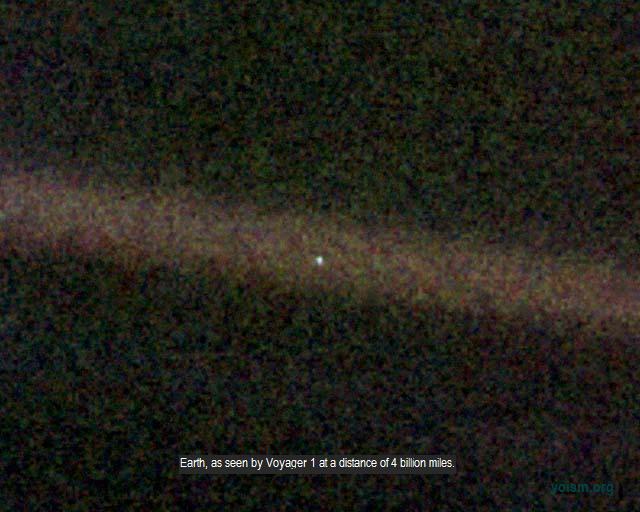
So, today is Earth Day: a day to celebrate our lovely pale blue dot, and in order to mobilise ourselves, a call to action to stop it getting wrecked.  As Phil Plait mentions on his blog (go there, there's a fantastic video/animation from orbit), there will inevitably be a slew of articles and blog posts bemoaning the mess we've made, and how we really need to get our act together and sort out greenhouse gas emissions, pollution, and all that sort of thing.


And yes, we have undoubtedly caused a lot of destruction all over the place, from shocking habitat loss to a slow warming of the entire planet; but I too would rather not dwell on the negatives. I am reminded of an article I read the other day in New Scientist (from last June - I'm actually that far behind), which discusses the possible formal classification of our current era as the Anthropocene, i.e. a geological age in which we are the principal instigators of planet-wide change. The point of the article is not, however, to focus on the pain and pollution us pesky primates permeate, but to point out the fact that this kind of large scale change is actually a bit of an achievement. The Anthropocene has been a long time coming, not just the result of recent increased fossil fuel use or land development - we have been clearing flora and decimating the fauna for about as long as we have been human - and in those few hundred thousand years we have made a significant and measurable effect on almost all areas of the planet.

Putting aside the fact that many of the changes are most certainly detrimental (species extinction and the rise of precarious monocultures, and all that), this is a remarkable thing to have done. This planet is huge: we have built over only a small fraction of its surface, excavated a tiny proportion of its interior, and have barely begun to explore the vast depths of the oceans... and yet we are capable of altering it on a large scale, without even trying. With not even a hint of deliberate terraforming, we have made alterations that nature alone would never have done, making large tracts of land more suited to our habitation or exploitation. With inevitable population growth and advances in technology, and the prospect of geo-engineering looming, this will only become more pronounced.

Now of course I'm not saying that our apparent destructiveness is a wondrous thing to be celebrated: but it is rather impressive. The main point of the New Scientist article - with which I am inclined to agree - is that this shows the awesome potential we as a species have, for large scale alterations to an entire planet. We have been changing the environment since we first started hunting mammoths or rotating crops, but we now wield more power than ever before in terms of our ability to shape the future of life on Earth (for better or worse) - which is something which we really need to face in the coming years.

The upside of all of this (other than my usual awe at humanity's grandiose achievements) is that with this power, we have the potential to start doing things properly. Maybe not yet, but soon, we will likely have both the technology and the motivation to use our innovative and progressive nature for the good of the planet, limiting the damage we do, as well as making it a safer and more stable place to live (nature doesn't exactly have a good track record at not killing us).

Or if all else fails, our experience of making drastic and permanent changes to the operation of an entire world will be useful when we finally go beyond our Earthly cradle and start colonising and terraforming other planets.