Showing posts with label space. Show all posts

Friday, 24 August 2012

Some remarks about Neal Stephenson

I recently attended a very interesting event down at the Watershed cinema - American science fiction author Neal Stephenson came to give a talk, centred around his new book, "Some Remarks". This a collection of non fiction essays on science, technology, history, gaming, and other such fun things. I've not the book yet - in fact I've only actually read one of Stephenson's books, namely "Diamond Age" -  but from what I know he's part of the interesting new wave of hard sci-fi that emerged in the last few decades.


The talk was certainly interesting. He spoke on various topics connected to the book, including an interesting comparison between the rise of modern internet technology in places like Silicon Valley, and the innovation of the 1850s, when Victorian scientists and engineers were making a big push to make the world a more connected place. A big part of this was the project to lay cables across the globe, to broaden the range and usefulness of the telegraph network. It turns out the act of cable laying is a lot more difficult that one might initially assume - the ocean floor isn't flat, so the speed of the ship needed to be constantly varied so that the cable would mold to the shape of the sea floor, as it touched the bottom several miles behind the ship. The whole thing proceeded in quite a hacky way, with engineers basically inventing the necessary technology as they went along - and at one point ruining a transatlantic cable by running 2000 Volts through it; so it makes an interesting contrast to the carefully designed and planned nature of large projects today.

Stephenson's fascination with science, both old and new, was quite evident, especially when he talked about the potential for what can and should be achieved - he spoke passionately about the need to move on from oil as a fuel source and fix some of the mess we made; this was balanced, and in part motivated by, an anger at avoidable catastrophes such as the Deepwater Horizon oil spill, and a frustration that we haven't managed to get beyond this kind of thing. The difficulties of actually stopping the leak and the vast resources needing to clean it up notwithstanding, I can certainly sympathise with this - after all, oil leaks are something we've been suffering for decades, and it's not exactly the best use of our time.
Massive cock-ups: haven't we got beyond this yet?

However, following on from this, there was one point with which I (and several others, it seems) profoundly disagreed. While discussing technology and innovation, he made the claim that technological progress has slowed down, and we are currently living in an age of relative stasis. This immediately struck me as odd - we appear to live in a golden age of futuristic shiny technology, the like of which has never seen before, with capabilities beyond the imagining of the science fiction of the recent past - so how could that be so?

Of course, being technologically sophisticated and having all manner of complicated machinery is not the same as progress, and just because technology of the past improved doesn't mean we are continuing to innovate and invent. Stephenson argued this point as follows: imagine taking someone from around the year 1900, sending them forward to the 1960s, allow them to experience the world as it is and see how it's changed; then send them back, and get them to describe what they saw to their peers. Chances are, they will be unable to make themselves understood, lacking even the basic vocabulary to convey the mysteries of the future. On the other hand, take a person from the 1960s and bring them forward to the present: they would see that we have cars with smoother curves, that we still fly in 747s, that telephones have got smaller, and computers have got faster. Progress indeed, but nothing that is so utterly inconceivable that they could never tell anyone, or that would be forever beyond their comprehension.

This might seem a reasonable argument on the face of it; but the more I thought about it, the less convincing it became. Admittedly, a number of the concepts present in the 1960s are still alive and well today, just smaller/faster/better/stronger/chewier. But on the other hand, we now have the internet, an idea likely to be almost completely alien to your average 1960s inhabitant. It's not just that we can send messages between machines fast and reliably: it's the previously unheard of idea that the wealth of human knowledge is instantly accessible by almost anyone; the way that we can communicate and interact with people on the other side of the world in complex ways in real-time; the way it has spawned entire new communities and ways of doing business. Then there's the rise of the smartphone, meaning that many people carry around in their pockets a device allowing them to be constantly connected to a vast network of friends and collaborators. We have become accustomed to these things now, but it is worth remembering that they are not just better ways of doing old things: they are fundamentally new ways of using technology and interacting with other people, which have undeniably changed society in innumerable ways. And it's not just communications technology that would astound our 1960s traveller: the sheer computing power that not only exists, but resides in our pockets; the ability to build detailed 3D models of the inside of a living person, and peer inside their bodies in real time; how almost continuously for the last several years, there has been a constant human presence in space. The list goes on.

Then again, I will concede one thing: as amazing as these advances would seem to the people of fifty years ago, they would probably still get the hang of it, more so than one from over a century ago. But I don't know if this is so much down to the nature of technology, as the way people think: the imagination of people in the 60s and their capacity to imagine the future would probably have been a lot better than their predecessors: impossible things were no longer quite so out of reach. I'd say that this increased ability to contemplate the improbable was helped in no small part by the science fiction of the time: people were willing to look to the future and seem something new.

"The space programme is dead".  No it isn't.
But this argument that Stephenson made was more than just about the slowdown of technological growth: it was about ambition and inspiration. He lamented that there were no big projects any more, and that the space program was dead. Seriously: he said this, while there is currently a robot the size of a car exploring the surface of Mars. The landing of the Curiosity rover, and audacious feat consisting of being lowered from a sky crane lofted by retro rockets, and controlled entirely by autonomous software, is one of the most impressive things I've seen this year, and looks like pure sci-fi. That we can do such things - and moreover, that we want to, and that it is capturing the imagination of so many people - shows that the space programme is alive and well. Not only that, but can all view full colour panoramas taken on the surface. The only reason NASA isn't doing more is a chronic lack of funding; but what it achieves with what it has is quite remarkable.
Go explore this 360° Mars panorama. Seriously, do it.

On the other hand, reports of the demise of human space flight are, at least at present, fairly accurate. With the end of the shuttle programme the only country now capable of putting humans in space is Russia, using their trusty yet antiquated rockets. Moreover, our hypothetical 1960s time traveller would be shocked to hear that, while we reached the moon within a decade of first touching space, we've not been back in forty years - which is indeed a cause for some sadness and concern. It's worth remembering though that that momentous achievement took a big chunk of the resources of the most powerful nation on the planet, and was motivated by a dangerous game of one-upmanship with a rival superpower. It's incredibly impressive that humans reached the moon with 60s technology, but to do it repeatedly was simply not sustainable - we still need to find ways of doing it cheaper, safer, and without depending on the full support of an American president.

That's why recent developments in the private space industry are so exciting: individual companies are starting to get into space, from the development of Scaled Composites' SpaceShipTwo to the recent docking of the SpaceX Dragon capsule with the ISS*. This is important, since once private industry gets in on it, and finds it to be possible and profitable, then the human exploration of space can really start happening.  The exploration of space and other planets by government organisations is a fine thing and long may it continue - but there's no way space is going to become a new frontier for humanity if it is government controlled. It took a long while to get started, but as I'm sure you can imagine, the technological difficulties of building low-cost, reliable, safe spacecraft are pretty challenging, and it's taken a lot of advances in materials science, aeronautics, rocket science and computing to make it happen. Such things can't possibly happen overnight.

[*an aside: I love the way we can casually just refer to the ISS now, as if it's just some other piece of hardware... it's a freaking space station. In real life. In orbit. With people living on it. Yeah.]

Private space industry docking with the space station

This leads on to one of the reasons I think that it's easy to get the perception that technological progress is slowing down, and what might be behind some of Stephenson's remarks. Science, technology and engineering are still progressing at a fast pace, but there is so much more of it; and as discoveries are made, they become harder, as only the difficult things remain to be done. Then, with every discovery made, it opens up whole new areas of knowledge, and whole branches of science come into being that also need studying. Progress is being made all the time in all these fields all the time, but it's just that a breakthrough in one area can seem insignificant on the scale of the whole - and because it takes a large number of small breakthroughs before something radically new can be done. These things add up - for example the advances in display technology, interfaces, computing power and battery capacity that allowed devices like iPhone to be invented - but they all take time. There's probably some law that says even if discoveries are made at an exponentially increasing rate, that technology requires them in ever greater numbers, so the growth in technological sophistication won't just blow out of control (actually, I would just love to see what would happen if you put Neal Stephenson in a room with Ray Kurtzweil).

To explain this, it's useful to think of scientific research as the expanding edge of a circle. In the beginning there was only a small circle, where there weren't all that many things to work on; virtually any upstanding gentleman with a workbench and some magnets could make a discovery (as one questioner could put it, you would work for a while and discover ten physical laws), and make a noticeable dent in the circle. One person could even reach opposite edges of the circle. But as the circle gets bigger there is more of a front to work on, and any one person can only make a small contribution to its size, and only along a relatively small part of its length. There are more and more people working on expanding this circle as time goes on, but the circumference keeps getting larger, which means the area of the circle is increasing at a proportionately slower rate - so even though vast swathes of understanding are covered by even a small increase in radius, this doesn't look so big compared to the circle as a whole.

So I think it's an easy trap to fall into, to think that we're slowing down at progress - especially since we live in such a technologically advanced time, where we're used to things being amazing and expect new and faster gadgets on a regular basis. But difficult things take time, and the bigger projects depend on so many areas to make crucial advances that their overall progression seems unbearably slow. Neal Stephenson lamented the fact that we still haven't managed to devise a fuel to replace gasoline, or a way to efficiently capture solar energy: I'd argue that this is not so much due to a lack of imagination, but just the fact that these things are really hard, and we're really trying. Admittedly a big kick like oil running out or some political enthusiasm and guidance would spur things on, but it's not that people stopped working on it.

I can see where he's coming from when he laments the apparent stasis of technology, as we muddle on with our fossil-fuelled existence in a world without flying cars and moonbases. The dreams of so many sci-fi authors never quite materialised, and it's tempting, especially for someone whose job it is to imagine fantastic visions of the future, to think we've lost our way: that  humans stopped dreaming. But given the vast advances made in medicine, science, artificial intelligence, space flight, nano technology and so on in recent times, I don't think we have to worry about any sort of innovation drought; the big advances I've seen even in my lifetime remind me of what we can still do. Exploring the vast frontier of science isn't quick or easy - but it's certainly going to keep us busy.

Incidentally, I'm writing this on a Raspberry Pi - a computer costing £25 small enough to fit in a matchbox (if you have really big matches), with computing power several times that of some desktop machines I've owned. How's that for progress.




Friday, 25 May 2012

Capturing the Dragon

"Houston, it looks like we got us a Dragon by the tail"


Well that was amazing: I just watched the live video feed from NASA of the SpaceX Dragon capsule docking (well, being grabbed by a robot arm) with the International Space Station. This is a pretty important moment: it's the first time a privately funded mission has made it to space and linked up with NASA.


It was pretty impressive, to watch the robot arm being carefully guided to link up with the capture mechanism on the Dragon: that's a lot of complicated equipment being wielded in a place with very little margin for error, and watching the tense faces at Houston goes to show how hard it all is. But of course, that sort of thing has happened loads of times now, with the ISS having been in orbit for years, and numerous other complicated things (such as Hubble) being delicately positioned in orbit.

That isn't the point though: so far, every space mission has had the backing of very big, well funded (in comparison)  government agencies. The achievements of NASA et al. over the past decades have obviously been immense - humans on the moon, probes to the edge of the solar system, robots on other planets. These are right and proper things for publicly funded science to be doing - but if it takes a massive government-funded organisation to get anything into space, that's going to be a problem. It's not the kind of setup that will let humans really do space, or allow the kind of unlimited exploration and adventure that we'd all love to see.

NASA's budget, as we recently became only too aware, can only stretch so far, and making the hard choices between different missions is no fun. Now though, SpaceX has conclusively shown it is possible for a private company, in just a few years, to become capable of getting hardware into space, and interacting with the bigger players already there. Hopefully they and other private companies will soon be capable of dealing with the necessary commercial aspect of space - launching satellites, tourism, and so on - leaving publicly funded bodies to get on with the fun stuff.

That's the practical, financial argument, anyway. But from a futuristic, sci-fi point of view, this achievement is the start of something very important. It's hard to imagine humanity becoming a proper space-faring race if only governments of wealthy nations can go there. And while the initial plan, or so I gather, is for private companies to step in handle the drudgery of supplying the ISS, maintaining satellites and so on, I don't doubt that once more companies get off the ground, so many more things will begin to happen. Who knows the possibilities that could open up, once space becomes easy for ordinary people (OK, not quite, but you get the idea) to reach, who are free to boldly go as they see fit, without having to justify every bit of spending to governments or taxpayers: this is "a new era for space flight unfolding in real time" as the NASA video commentator put it.

Of course, today's achievement didn't happen spontaneously, and it certainly wasn't cheap: it took many many years to get this done, and months of planning just for the docking; and I'm guessing the price tag (for the mission itself and years of development) and was pretty heavy. Running up and down to space on a whim is still a long way away. But the fact that a private company can get to space is the important point, and illustrates how far we have come in the last fifty years. It's often lamented that humans have not been back to the moon since the '70s - almost as if we lost interest - but in those days, it took a large part of the wealth of a world superpower to do it. This is clearly no longer the case - and it can only get easier from here.  The true age of space flight could soon begin.

Images taken from the NASA video feed at http://www.nasa.gov/multimedia/nasatv/ustream.html

Sunday, 22 April 2012

Happy Birthday, Planet! (sort-of)

Some brief thoughts on Earth Day (because I have a ton of other stuff to do)


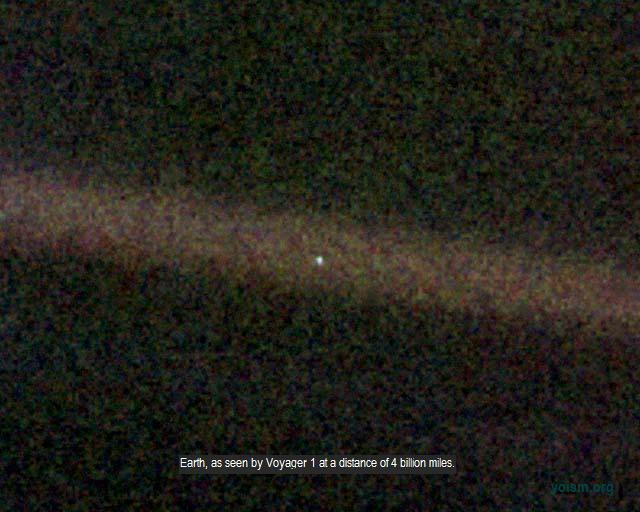
So, today is Earth Day: a day to celebrate our lovely pale blue dot, and in order to mobilise ourselves, a call to action to stop it getting wrecked.  As Phil Plait mentions on his blog (go there, there's a fantastic video/animation from orbit), there will inevitably be a slew of articles and blog posts bemoaning the mess we've made, and how we really need to get our act together and sort out greenhouse gas emissions, pollution, and all that sort of thing.


And yes, we have undoubtedly caused a lot of destruction all over the place, from shocking habitat loss to a slow warming of the entire planet; but I too would rather not dwell on the negatives. I am reminded of an article I read the other day in New Scientist (from last June - I'm actually that far behind), which discusses the possible formal classification of our current era as the Anthropocene, i.e. a geological age in which we are the principal instigators of planet-wide change. The point of the article is not, however, to focus on the pain and pollution us pesky primates permeate, but to point out the fact that this kind of large scale change is actually a bit of an achievement. The Anthropocene has been a long time coming, not just the result of recent increased fossil fuel use or land development - we have been clearing flora and decimating the fauna for about as long as we have been human - and in those few hundred thousand years we have made a significant and measurable effect on almost all areas of the planet.

Putting aside the fact that many of the changes are most certainly detrimental (species extinction and the rise of precarious monocultures, and all that), this is a remarkable thing to have done. This planet is huge: we have built over only a small fraction of its surface, excavated a tiny proportion of its interior, and have barely begun to explore the vast depths of the oceans... and yet we are capable of altering it on a large scale, without even trying. With not even a hint of deliberate terraforming, we have made alterations that nature alone would never have done, making large tracts of land more suited to our habitation or exploitation. With inevitable population growth and advances in technology, and the prospect of geo-engineering looming, this will only become more pronounced.

Now of course I'm not saying that our apparent destructiveness is a wondrous thing to be celebrated: but it is rather impressive. The main point of the New Scientist article - with which I am inclined to agree - is that this shows the awesome potential we as a species have, for large scale alterations to an entire planet. We have been changing the environment since we first started hunting mammoths or rotating crops, but we now wield more power than ever before in terms of our ability to shape the future of life on Earth (for better or worse) - which is something which we really need to face in the coming years.

The upside of all of this (other than my usual awe at humanity's grandiose achievements) is that with this power, we have the potential to start doing things properly. Maybe not yet, but soon, we will likely have both the technology and the motivation to use our innovative and progressive nature for the good of the planet, limiting the damage we do, as well as making it a safer and more stable place to live (nature doesn't exactly have a good track record at not killing us).

Or if all else fails, our experience of making drastic and permanent changes to the operation of an entire world will be useful when we finally go beyond our Earthly cradle and start colonising and terraforming other planets.

Friday, 6 April 2012

To sit, to listen, to boldly go

From classical music to space flight, and how we insist on being amazing


I just got back from seeing an orchestral concert, in a nice grand concert hall  down the road from where I work - featuring a Beethoven symphony and Elgar's cello concerto, both of which were most enjoyable. Often in concerts like this I find it interesting to look around at the rest of the audience - especially when seated behind the orchestra, as we sometimes are, since it affords a pretty good view of the whole audience staring back at you.

It's interesting because on stage there are a few tens of musicians, passionately and skilfully doing what they do... and watching and listening are hundreds of people, all sitting in perfect silence, in rapt attention. These are people of all ages and descriptions, who no doubt spend most of their lives rushing around frantically getting things done; but for a few hours, we all sit perfectly contentedly and simply appreciate the art that other people are creating for us.

Try to imagine what an outside observer might think of it all, some alien being with no knowledge of our culture. Here are hundreds of stationary people, the majority of whom are doing nothing but observing the others - it would appear to be a rather odd use of time. In a practical sense, this serves no real purpose: nothing is getting done, no one (in the audience) is progressing any further toward their life goals, this doesn't benefit society in any significant material way, or advance the progress of science. 

That's partly what makes it all so beautiful. Here we all are, with a million things to do, but not too busy to go out of our way to appreciate good art, flocking sometimes in our hundreds of thousands to witness the performance of a prestigious artist.  Obviously, this applies far wider than just classical music, but the calmness and sense of awe makes the point that much clearer - as opposed to say a rock gig with people more obviously physically enjoying themselves, or a movie where people are being told a compelling story.

However, one could ague that while it's all well and good to sit around admiring each other's intricate skill, and congratulating ourselves for being such a refined and cultured species, there really are important things to be done.  While we sit in a concert hall or theatre, hundreds of people will die of preventable causes; millions languish in poverty from which they have little hope of escape; almost a billion people struggle to survive on a tiny fraction of the admission price. Clearly, the expense and effort that go into such displays of musical prowess
could be made to do more worthy works...

But still I find this amazing; I find it inspiring and uplifting. Yes, there are bad things happening, but even so we choose to spend our time creating and appreciating wonderful works of the imagination. We know we could be doing something "more productive" but choose, at least for the moment, not to. Essentially, we don't let our failures get us down, or burden us with guilt, to such an extent that we can't explore the heights of what we can achieve.

This, I think, is one of the most important and progressive sides of human nature. It allows us to move forward, to try new things, to wonder why, explore unknown frontiers - even when the problems we have already remain unsolved. It drives us to stretch our imagination to new challenges - and along the way, we stumble upon solutions we never would have thought of otherwise.  We struggle daily on Earth, but still reach for the stars - because we can, because we want to, because we don't know what's there - inadvertently solving other problems along the way. We find new lands. We see more wonder. We prolong life; we create life.

What's wonderful about humans, is that we not only find ingenious ways to solve our problems; but that we will do amazing things in spite of them.